


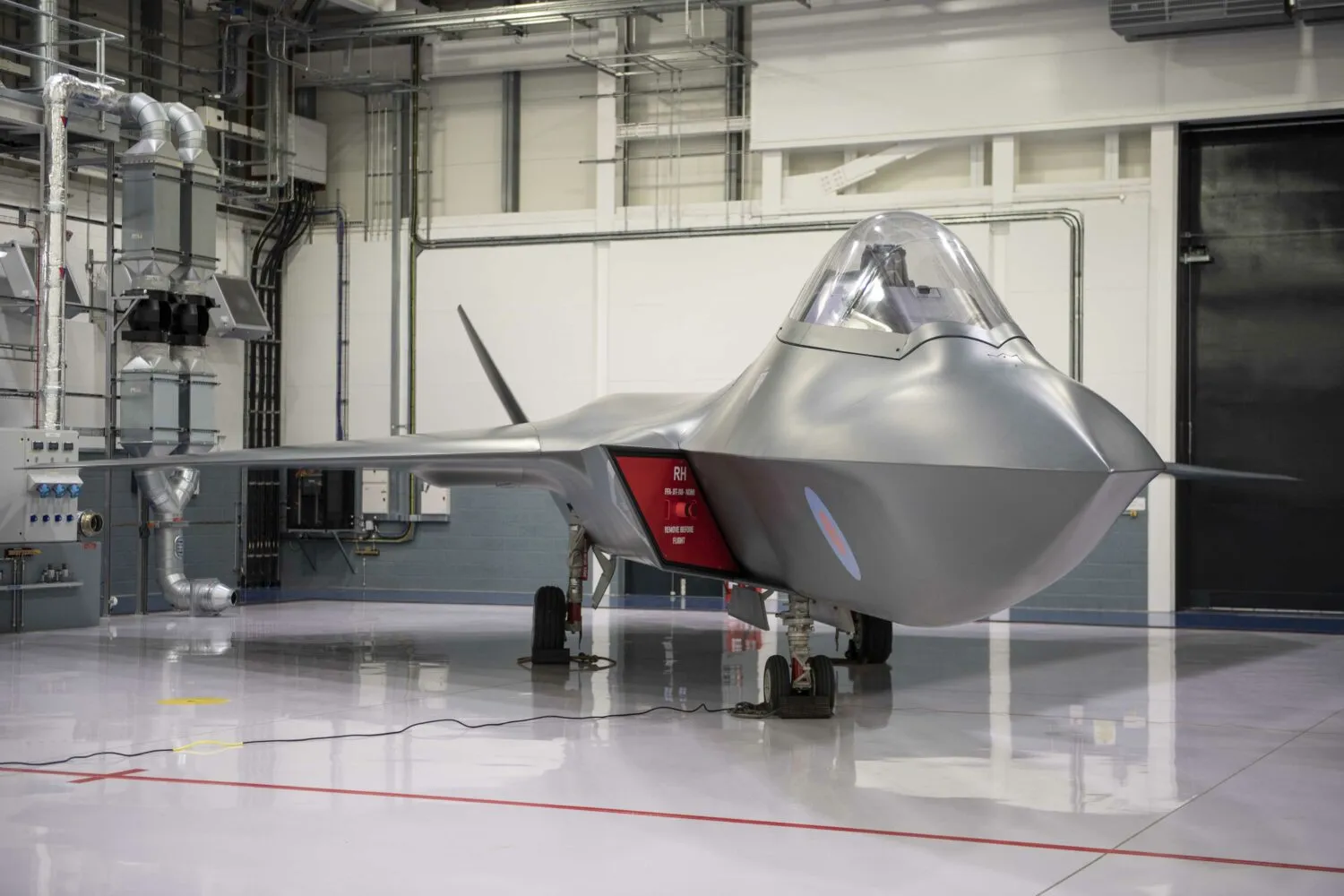
United Kingdom and Italy, involved in the Global Combat Air Programme (GCAP) for the development of a new generation fighter jet, are currently experiencing tensions with each other.
According to the Italian government, the United Kingdom is not sharing essential technical information with its partners, Italy and Japan. Italian Defence Minister Guido Crosetto expressed his concern about the United Kingdom’s reluctance. He urged London to share technology within the collaborative program and to break down the “barriers of egoism.”
Crosetto emphasised the importance of GCAP in an interview with Reuters. The programme aims to develop an advanced fighter aircraft equipped with the most modern technologies by 2035. The minister, a prominent member of Prime Minister Giorgia Meloni’s right-wing Fratelli d’Italia party, stated that sharing technology is fundamental for a “serious relationship” between the partner countries.
Crosetto expressed only mere partial satisfaction with the current state of cooperation. ‘There is no more room for first- and second-class countries, or for clinging to old privileges,’ the Italian minister said. ‘You have to break down certain forms of egoism. Italy has done this completely, Japan almost completely. It seems that the United Kingdom is much more reserved in this. That is a mistake, because egoism is the greatest enemy of nations.’
Crosetto has not provided specific details about the technologies that the United Kingdom might be withholding. In response to Crosetto’s remarks, the UK Ministry of Defence (MoD) emphasised its enthusiasm for the GCAP program. ‘The technologies we are developing together and the capabilities we are building are at the forefront of science and engineering,’ a ministry spokesperson said in a written statement. ‘Together we will deliver one of the most advanced combat aircraft in the world.’
Disagreements
It is not the first time that international cooperation within the GCAP program has made headlines due to disagreements. Previously, the partner countries were already divided on the potential accession of Saudi Arabia to the project. Italy is a strong advocate for this expansion. Crosetto sees it as an opportunity to strengthen defence cooperation beyond Europe. While the United Kingdom and Italy were reportedly relatively quickly open to this idea, Japan strongly opposed it. Japan considered Saudi participation a potential threat to its defence exports and the overall planning of the program.
Swedish company
In December 2022, Italy, the United Kingdom, and Japan joined forces for the development of a new, advanced fighter aircraft. Previously, SAAB was also part of GCAP, but the Swedish company withdrew from the project last year. For the time being, the remaining collaboration on the development of the fighter jet appears to be progressing smoothly. The aircraft will likely be operational around 2035.
The estimated costs of the Global Combat Air Programme (GCAP) are in the tens of billions of dollars. The partner countries have yet to definitively determine the precise allocation of the budget. The UK Ministry of Defence had already pledged two billion pounds to the project, which carried the name of “Tempest” before Italy and Japan joined. It is highly likely that an export version of the fighter aircraft will also be developed to minimize the unit production cost.