


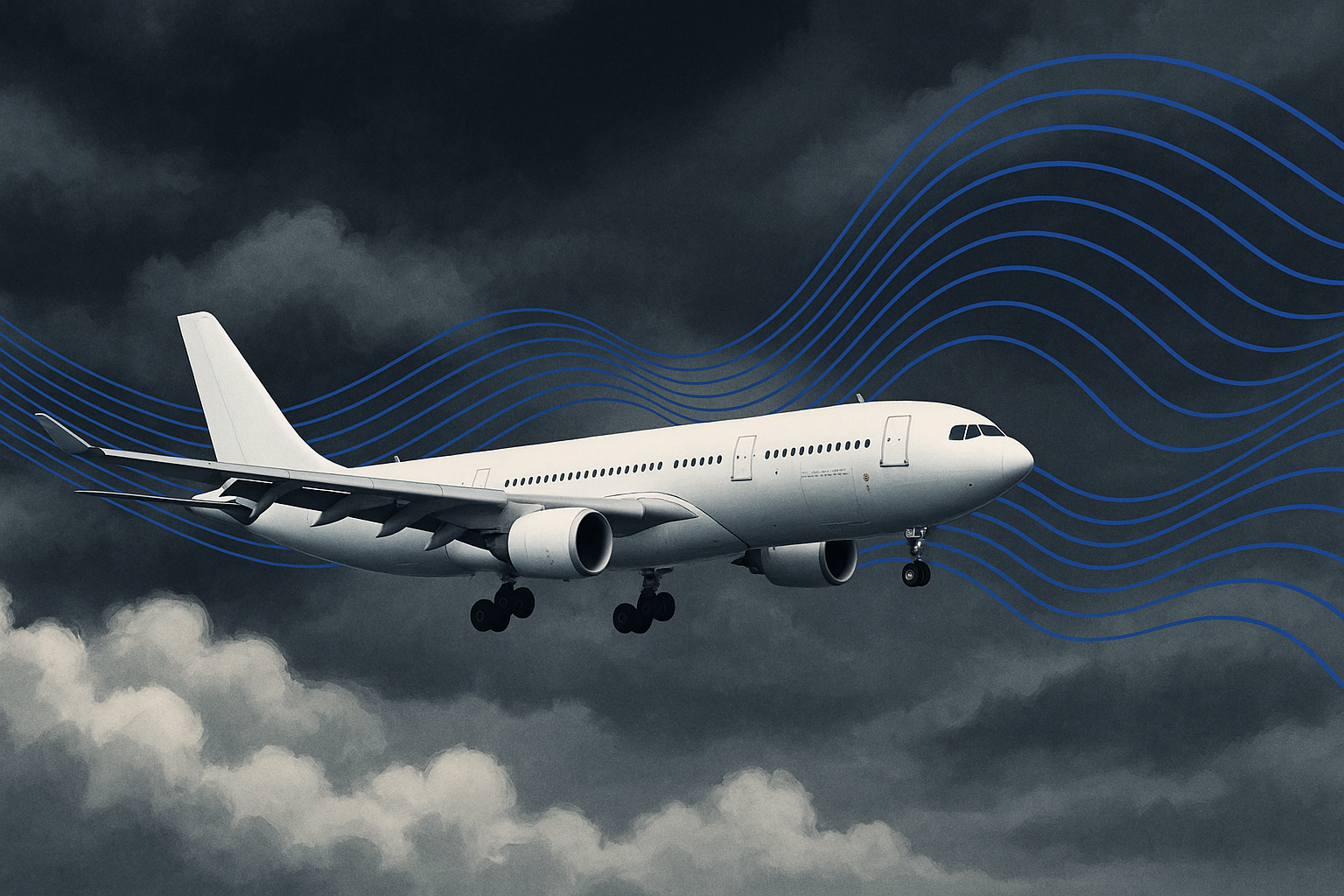
If you’ve ever been on a flight and felt the aircraft suddenly shake or dip, you’ve experienced turbulence. For many passengers, these bumps in the sky can feel unsettling—but in reality, it is a completely normal part of flying. Pilots are well trained to handle it, aircraft are built to withstand it, and most of the time, it’s nothing more than a temporary inconvenience.
What exactly is turbulence?
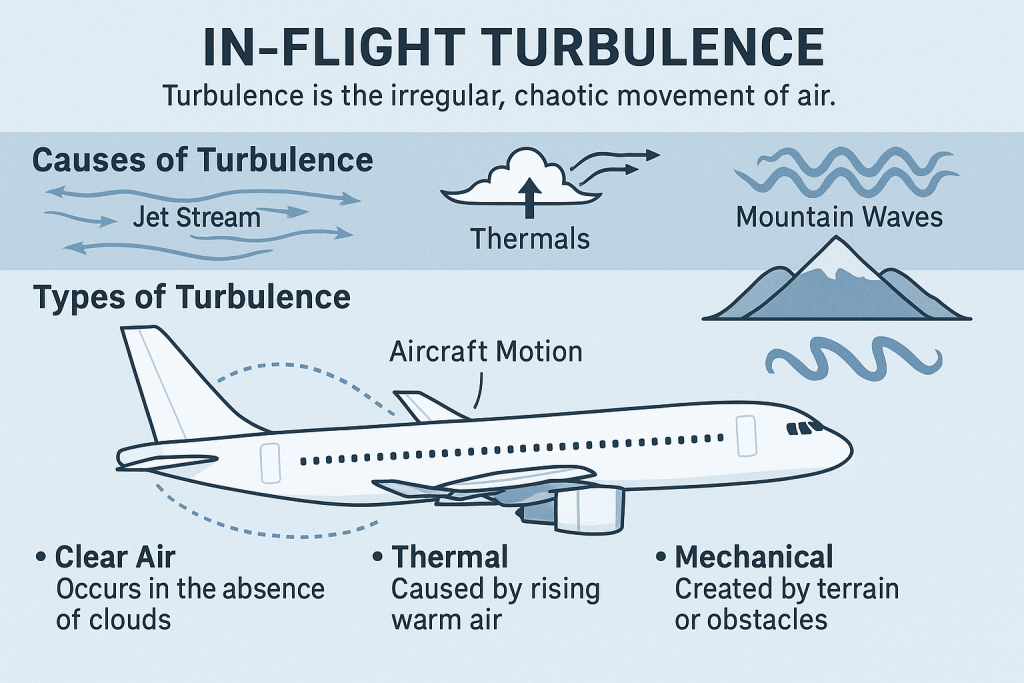
Turbulence is the irregular motion of air caused by shifts in wind speed or direction. Instead of smooth airflow, the plane passes through pockets of moving air that jostle it around. Think of it like driving on a road that suddenly gets bumpy. The car is still safe, but you feel the vibration.
There are different types:
- Clear-air turbulence – invisible and often at cruising altitudes, caused by fast-moving jet streams.
- Thermal turbulence – created when hot air rises, especially on warm days.
- Mechanical turbulence – formed when wind flows over mountains, buildings, or other obstacles.
- Wake turbulence – the swirling air left behind by another aircraft.
How do pilots deal with it?
Pilots receive constant weather updates, use radar, and rely on reports from other aircraft to anticipate turbulence. When possible, they adjust altitude or flight path to find smoother air. If it is unavoidable, they will turn on the seatbelt sign to keep everyone safe.
Importantly, pilots are trained to fly in much more difficult conditions than what passengers typically experience. For them, this is routine.
Are aircraft built to handle turbulence?
Yes—absolutely. Modern aircraft are designed and tested to withstand far greater stress than turbulence can cause. The wings, for example, can flex dramatically without damage. While the shaking may feel intense inside the cabin, the plane is structurally sound and far from its limits.
Why you shouldn’t worry
For passengers, the biggest risk during turbulence isn’t to the aircraft but to people who aren’t wearing their seatbelts. That’s why airlines always advise keeping your seatbelt fastened, even when the sign is off. Injuries from turbulence are very rare and usually minor, although there are exceptions.
The uncomfortable truth is that turbulence feels scarier than it is. Your body interprets the unpredictable motion as a loss of control—but in aviation, it’s simply part of the journey.
A normal part of flying
Turbulence might make you grip the armrest a little tighter, but it’s a natural phenomenon that pilots expect and aircraft are designed to endure. The next time you encounter a bumpy patch, remember: it’s not danger—it’s just the sky’s version of potholes.