


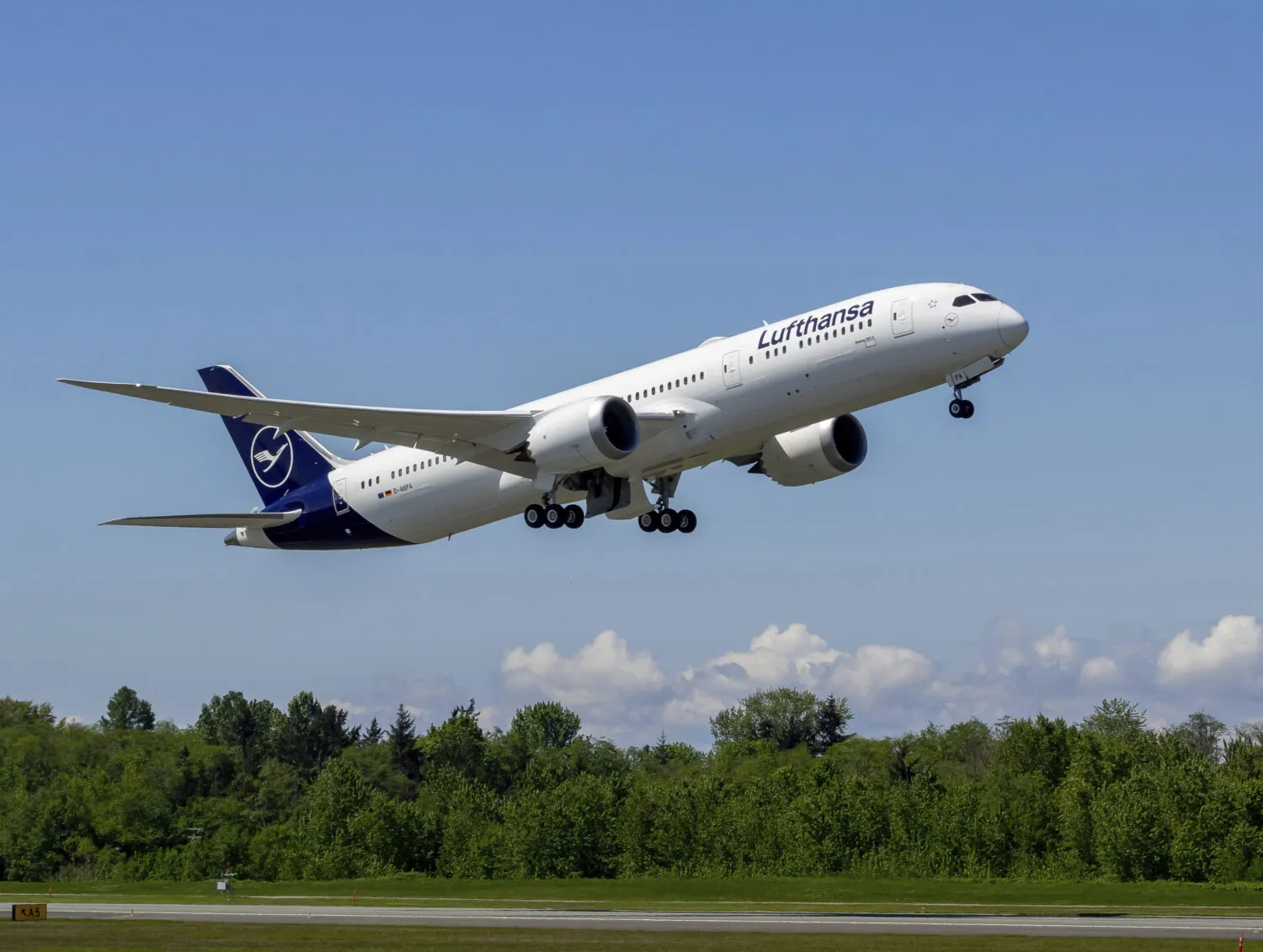
Lufthansa has been waiting for months for the delivery of several new Boeing 787s. Due to the announced increase in trade tariffs, the airline is concerned about a significant rise in costs.
Lufthansa has around twenty more Boeing 787-9’s on order from the manufacturer and is expecting to receive some of them in not too much time. The aircraft have been waiting at Charleston Airport, South Carolina for months, but haven’t been delivered due to the partial lack of seat certification. The airline intended to initially deploy the Dreamliners, possibly with fewer seats, on medium-haul routes starting this summer.
Earlier this year, Trump announced an increase in trade tariffs for countries within the European Union. The Union responded with a substantial price increase on American products. Although this European measure has been temporarily suspended, the possibility of a considerable cost increase for new aircraft for Lufthansa remains real. This is precisely where the company’s group structure comes into play.
Switzerland
Swiss Airlines, based in Switzerland, is part of the Lufthansa Group. The German airline is now exploring the possibility of having its Dreamliners delivered there first. Switzerland is not a member of the European Union and has not yet taken countermeasures against American tariffs. By registering the aircraft in Switzerland first, Lufthansa could potentially save a large sum of money. The Dreamliners would then be transferred to Germany at a later stage.
China
The trade war is not only having significant consequences for airlines but also for Boeing. A 737 MAX 8 that was supposed to be delivered to China’s Xiamen Airlines returned to the United States last week. This news followed China’s earlier announcement that Boeing is no longer allowed to deliver aircraft to airlines from that country. Furthermore, airlines have been asked to stop purchasing aviation-related equipment and parts from American companies. This was in response to a measure by the US, which recently announced that it would increase tariffs on Chinese goods by a staggering 145 percent.