


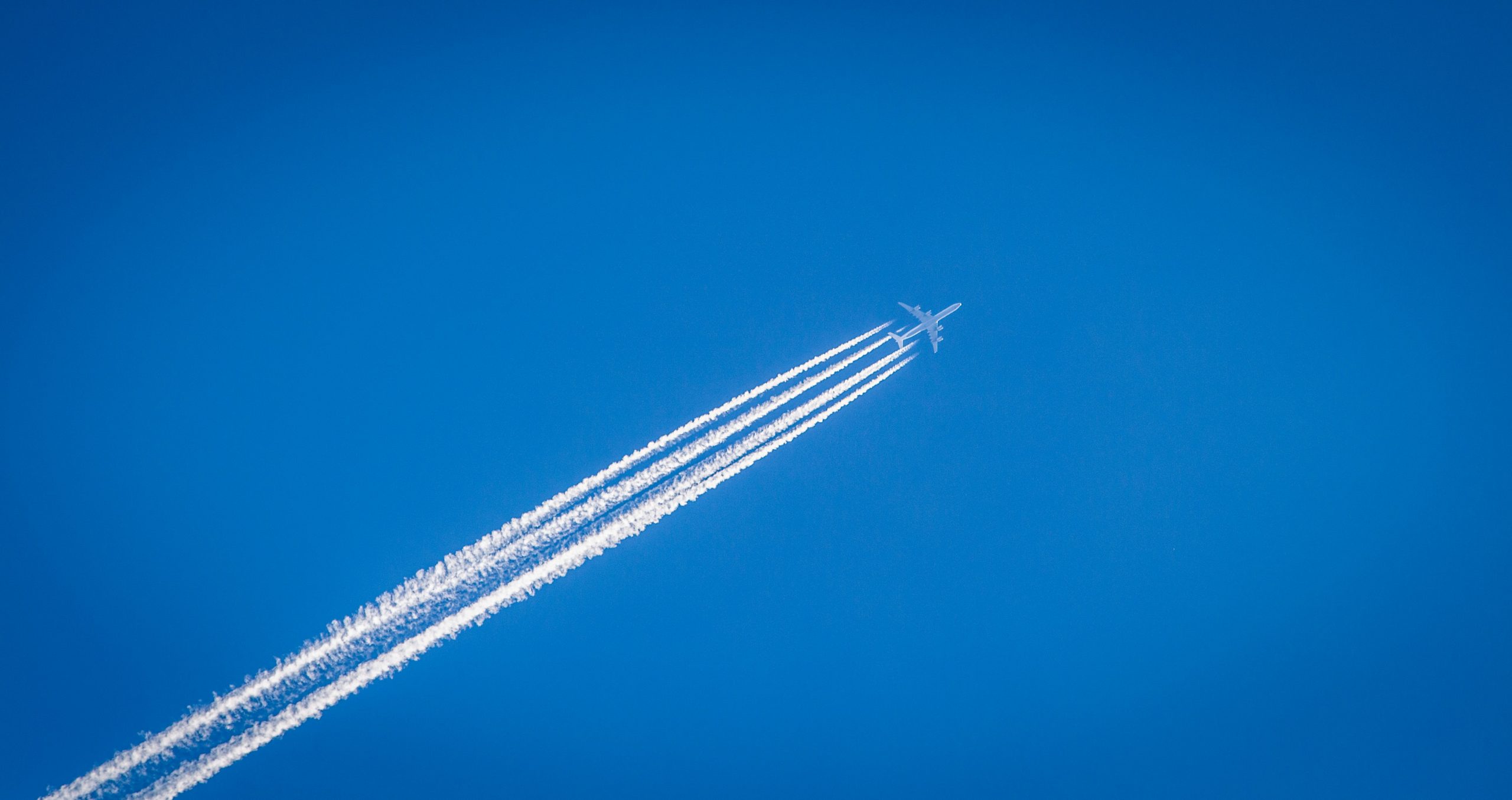
When you look up on a clear day, it’s common to see white streaks cutting across the blue sky. These lines, known as contrails (short for condensation trails), are formed by airplanes flying at high altitude. But what exactly causes them, and why do some planes leave long, persistent trails while others don’t?
The science behind contrails
Contrails are essentially artificial clouds created by aircraft engines. Jet engines burn fuel, producing carbon dioxide, water vapor, and tiny particles. At cruising altitudes – usually above 8,000 meters – the air is very cold and often close to saturation. When the hot exhaust mixes with this frigid atmosphere, the water vapor condenses and freezes around the particles, forming a visible trail of ice crystals.
In other words, they form in the same way as natural cirrus clouds – but with the airplane providing the initial trigger.
Why some contrails last longer
Not all contrails are the same. Their appearance and duration depend on atmospheric conditions:
- Humidity: If the air is dry, contrails may evaporate within seconds. If it’s moist, the ice crystals persist and spread out, sometimes creating cloud-like layers.
- Temperature: The colder the air, the more likely contrails will form.
- Altitude and route: Aircraft flying at slightly different levels may or may not leave trails, depending on the local conditions.
This explains why you might see one plane leaving a thick, long-lasting contrail while another, flying nearby, leaves none at all.
The environmental impact
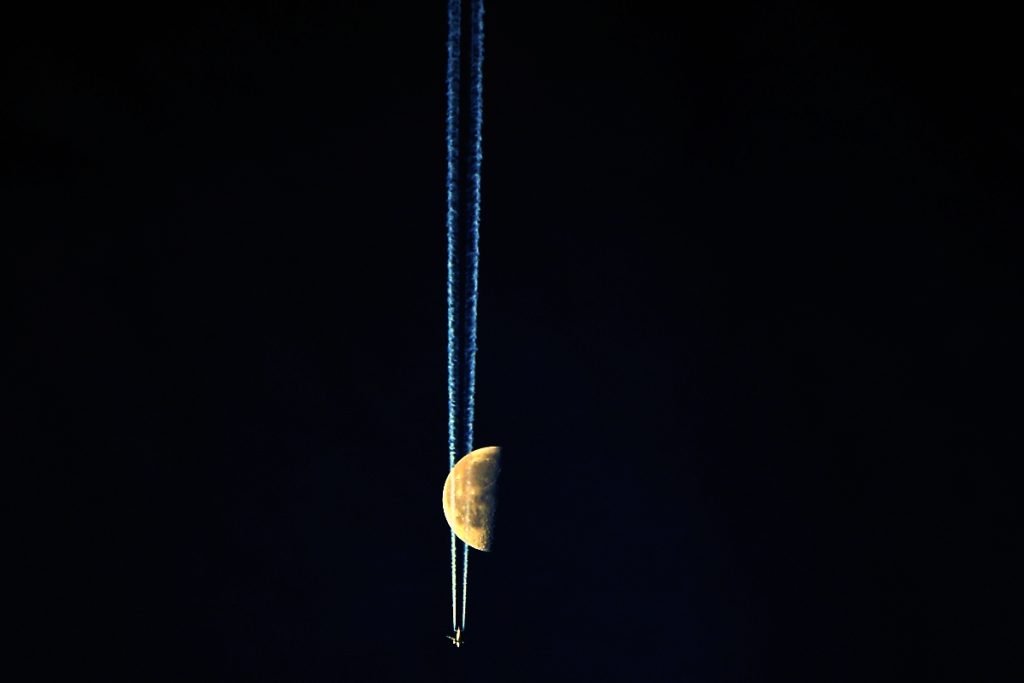
Contrails are more than just sky streaks – they affect the climate. If persistent, they can trap heat in the Earth’s atmosphere, contributing to aviation-induced cloudiness (AIC). Research shows that contrail-related cirrus clouds have a warming effect that may rival the direct CO₂ emissions from aviation.
Air traffic management and sustainable aviation fuels are being studied as ways to reduce contrail formation, but the science is still evolving and a lot of research is being done in this field.
Common misconceptions
Contrails are often confused with “chemtrails,” a conspiracy theory claiming that governments deliberately spray chemicals into the atmosphere. In reality, they are well-understood physical phenomena explained by atmospheric science, not hidden agendas.
A sky full of clues
Next time you see contrails overhead, you’re looking at more than just white lines in the sky. They are visible signs of high-altitude weather conditions, aviation technology, and even climate processes. Far from being mysterious, condensation trails show us the fascinating interplay between human activity and the atmosphere.