


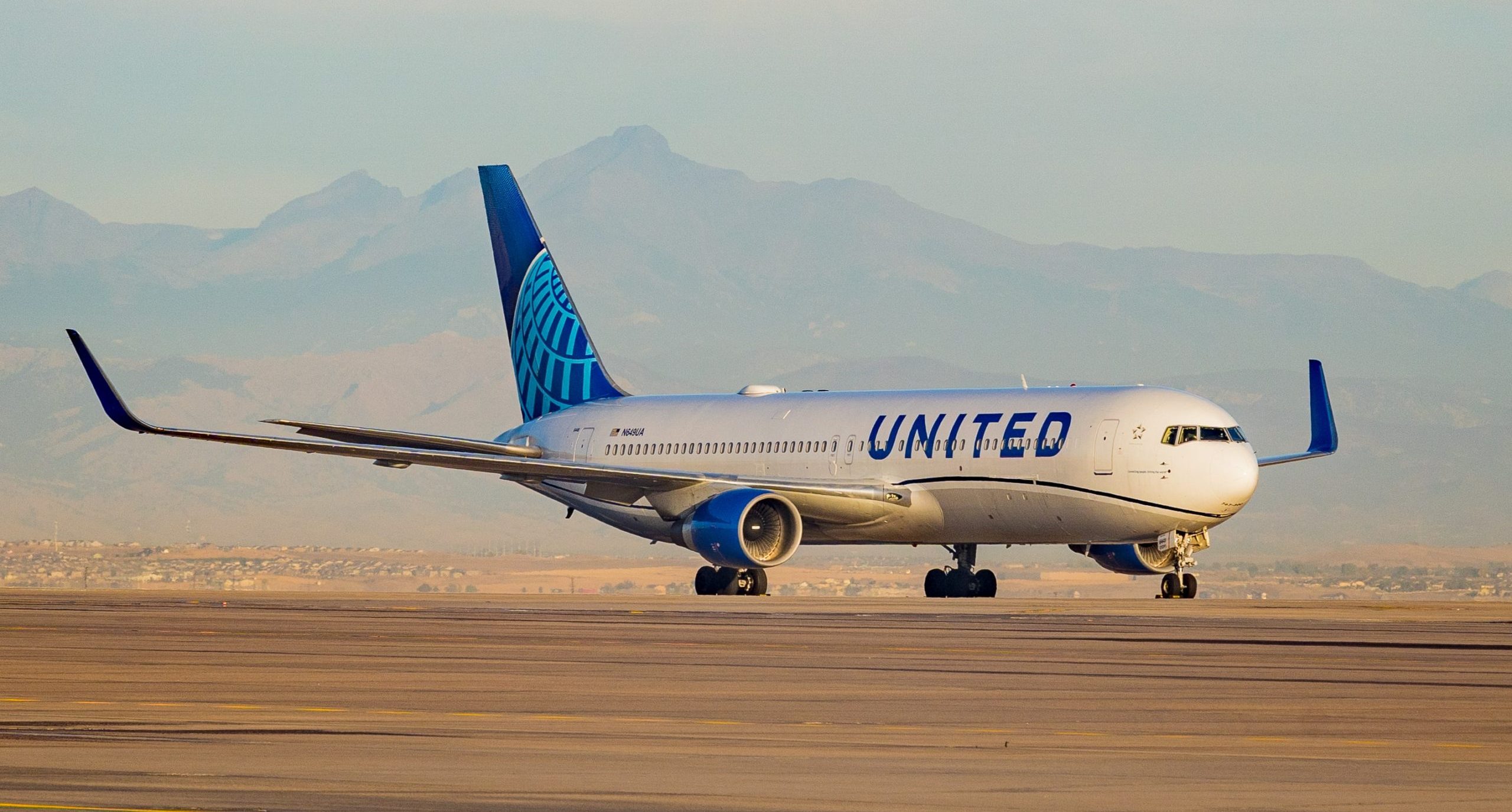
A United Airlines Boeing 767 operating flight UA748 from Washington Dulles to Geneva was forced to divert after a passenger’s laptop slipped through a gap in the business class cabin and fell into the cargo hold. It’s not the first time this has happened.
The aircraft had departed in the early evening for a routine transatlantic crossing, but less than an hour into the flight, while cruising off the coast of Maine, the crew elected to abandon the crossing and head to Newark instead, where the jet landed safely. The diversion of the United flight was officially recorded as an unscheduled maintenance inspection, yet the underlying cause highlights a surprisingly low‑tech vulnerability in a long‑haul widebody.
According to reports, the laptop was being used in the Polaris-style business cabin when it somehow slipped into a narrow gap between the seat structure and the cabin sidewall. That gap is normally covered by a long strip of foam intended to stop loose items from disappearing into the aircraft’s innards, but passengers have reportedly started using that foam as an improvised shelf for personal items such as laptops. With enough weight, the foam can shift or collapse, allowing objects to fall through. Beneath the floor, a ventilation opening leads into the cargo compartment; this vent should be protected by a metal grate, but the cover can be moved out of position, which is believed to have allowed the laptop to drop all the way into the hold.
Once the crew realized the device was no longer in the cabin, the operational question quickly turned into a safety one. Lithium‑ion batteries are treated with particular caution in aviation, because physical damage can trigger thermal runaway and an intense fire that is extremely challenging to manage in flight. With the laptop now in an inaccessible cargo bay and its condition unknown, the United crew opted for the conservative course of action: divert to a major airport where fire and maintenance services were readily available. After landing in Newark, ground crews were able to retrieve the laptop and inspect the aircraft; the battery was reportedly found intact, and the 767 continued to Geneva after several hours on the ground, arriving with a substantial delay.
Not United’s first time
What makes the story more troubling for United is that this was not an isolated oddity. The carrier has experienced at least two similar events on its 767 fleet in recent months, including an October flight from Washington Dulles to Rome that turned back after a laptop slipped behind a sidewall panel and into the cargo area. In another case, a United widebody diverted when a laptop became jammed in a seat, again raising fears about potential battery damage. Taken together, the incidents suggest a design and procedures issue rather than a one‑off mishap: foam fillers and removable grilles may meet certification standards, but in day‑to‑day service they are being used and stressed in ways that designers did not intend.