


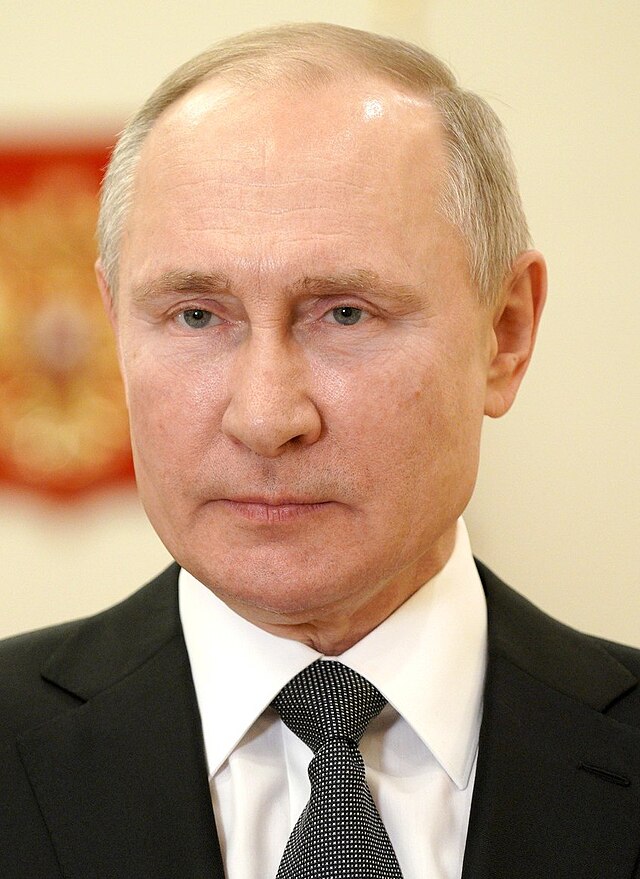
Russian President Vladimir Putin has officially renamed Volgograd’s airport to its former designation, Stalingrad International Airport, through a presidential decree.
Putin signed the decree during a visit to the southwestern Russian city on the Volga River. The renaming of the airport to Stalingrad is intended to honour the soldiers. 82 years ago, they secured one of the pivotal victories of World War II, preventing the Soviet Union’s subjugation to Nazi Germany.
Russia is currently preparing to commemorate the 80th anniversary of the victory over Nazi Germany. The Red Army’s role in the fight against the Germans was crucial. Estimates suggest that the Soviets suffered nearly nine million military deaths and an additional thirteen million civilian casualties in the struggle against the Nazis. Putin frequently emphasises this point.
The victory is annually commemorated on May 9th with a grand military parade in Moscow’s Red Square. Traditionally, the event was known for its bombastic displays, featuring numerous tanks and advanced missiles. However, since the onset of the war in Ukraine, the parade has become notably more subdued. Putin, accompanied by Belarusian dictator Alexander Lukashenko, will moreover commemorate the Battle of Stalingrad in Volgograd.
Stalin’s City Reclaimed
Governor Andrei Bocharov stated that the airport’s renaming was a request from World War II veterans and participants in the ongoing conflict in Ukraine. ‘Their word is law for me. That’s how we do things,’ Putin reportedly responded, according to the Russian state news agency TASS. This act is not Putin’s first attempt to rehabilitate Stalin’s legacy. He has also overseen the erection of several statues dedicated to the Soviet dictator.
The major city on the Volga rive was renamed Volgograd in 1961. Secretary General Khrushchev did so to erase the name of the reviled Soviet dictator Joseph Stalin (1878-1953). Under his authoritarian rule, an estimated nine to twenty million people perished due to executions, famines, and forced labor camps in Siberia.